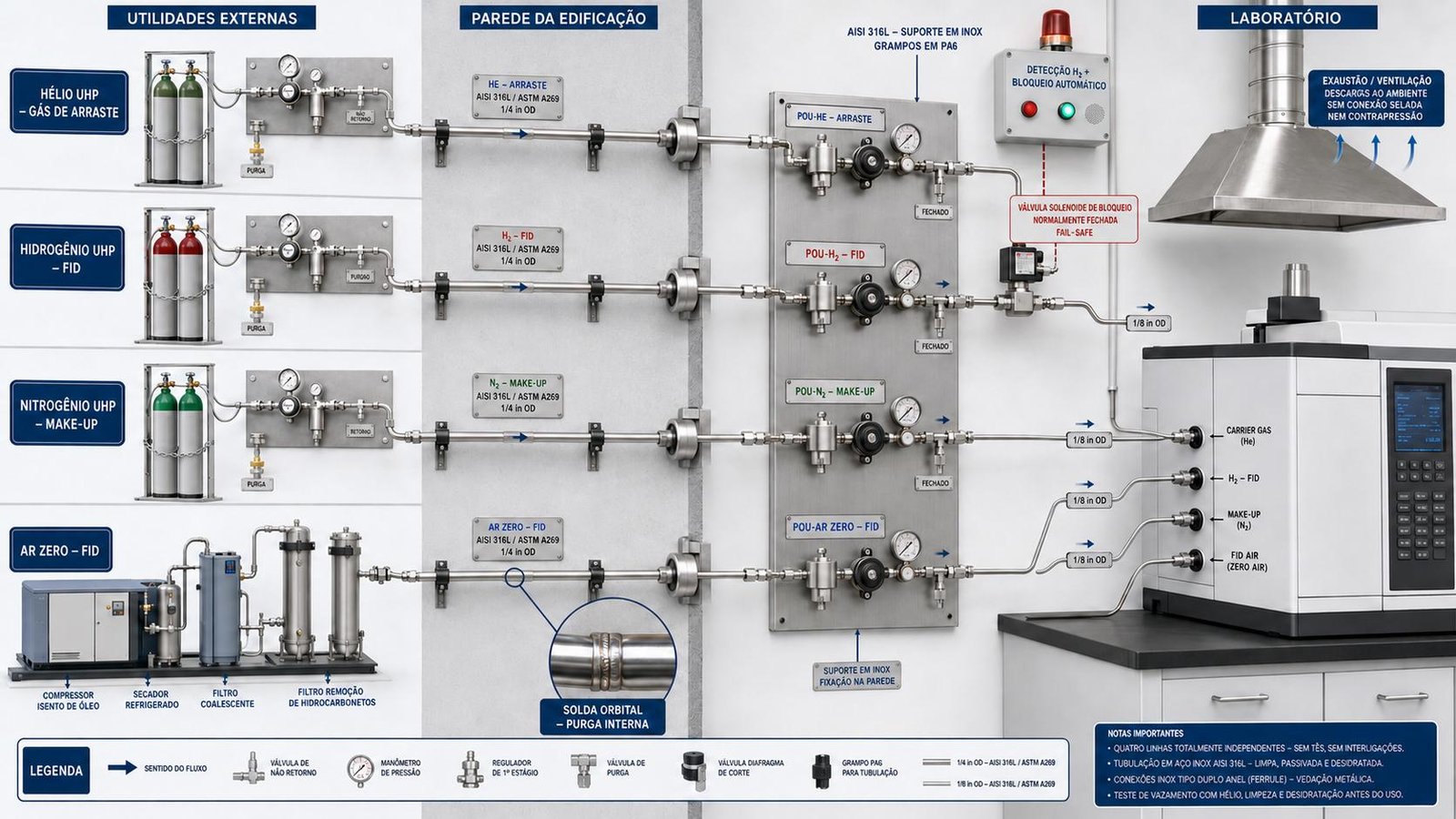
Analytical Instrumentation: The Science Behind Utility Infrastructure
The critical distinction between standard piping assembly and designing high-purity utility infrastructure engineered to instrument detection limits.
R&D facilities, quality control labs, and industrial process analyzers rely on delicate instrumentation to translate chemical phenomena into critical business data. However, OEM instrument specifications can only be achieved when carrier gases, reaction gases, and utility lines are delivered with absolute physical and chemical purity.
Basic Piping Assembly vs. Engineered Analytical Utilities
Leak-free, neatly installed tubing represents only the baseline. Professional analytical engineering solves deeper questions: What trace contaminant will destroy a GC-MS column? How do static vs. dynamic pressure drops impact ICP-OES plasma ignition?
❌ Standard Assembly
- • High baseline noise and severe calibration drift.
- • Plasma extinguishment during dynamic flow surges.
- • Premature filament burnout in Mass Spectrometry (MS).
- • Sample adsorption on unpolished internal tube walls.
✅ Prime Products Engineering
- • Design matched to instrument detection limits (ppm / ppb).
- • Electropolished (EP) 316L stainless steel tubing.
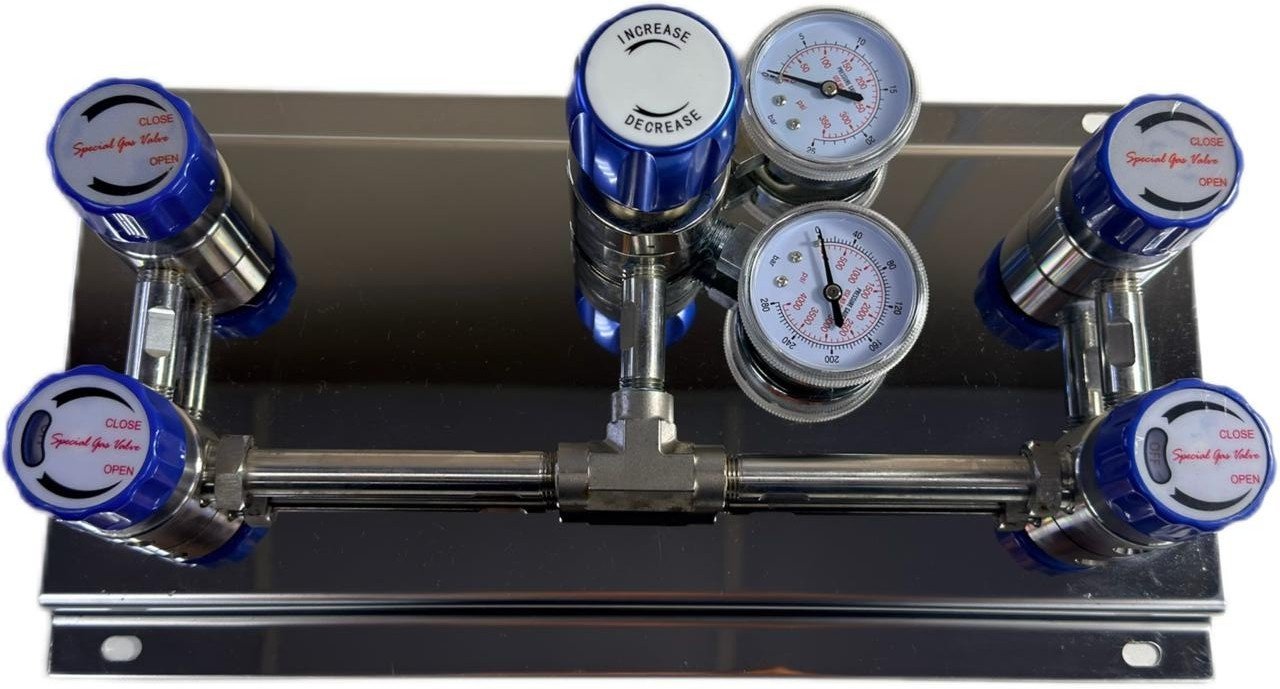
- • Metal diaphragm regulators with certified helium leak testing.
- • Integrated point-of-use gas purification and ESD protection.
Application Engineering by Instrument Class
- Flame Atomic Absorption (C₂H₂ / N₂O): Flame stability depends on ripple-free pressure regulation and strict cylinder acetone carryover prevention with certified flashback arrestors.
- GC-FID & GC-MS (He / H₂ / Zero Air): Microscopic leaks introduce atmospheric oxygen and moisture, causing rapid stationary phase oxidation and costly MS filament failures.
- ICP-OES / ICP-MS (High-Purity Argon): High flow torch demands must be sized for dynamic velocity rather than catalog static pressure to prevent plasma collapse.
- Continuous Emissions NDIR Analyzers: Sample conditioning lines require heated, non-adsorptive inert materials to prevent moisture condensation and analyte loss.
Translating metrology into robust infrastructure
Prime Products engineers evaluate atomization kinetics, plasma stability, and detection limits to deliver flawless laboratory utility networks.
Request Information
Our technical team is ready to serve your demand.
Technical Gallery